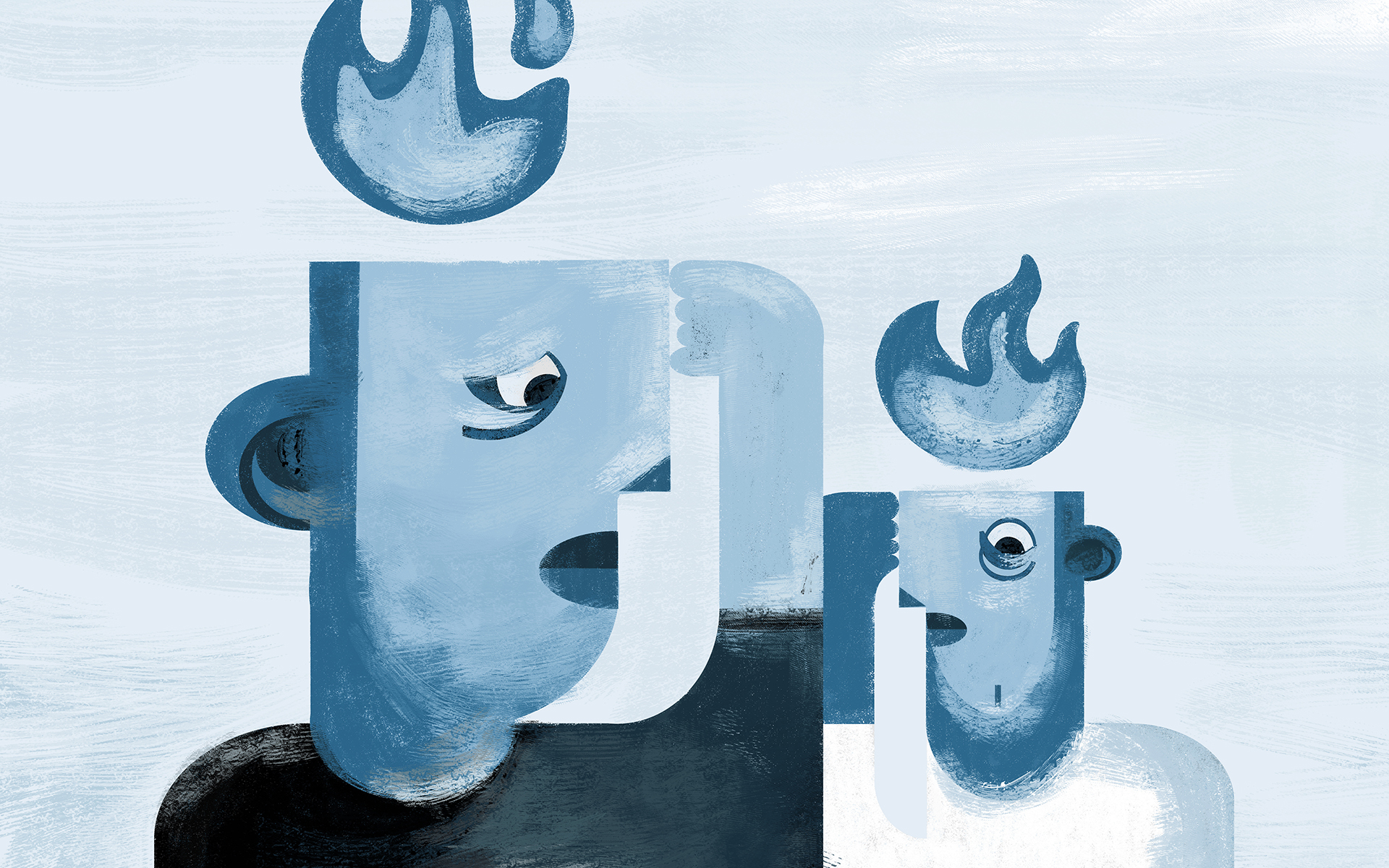
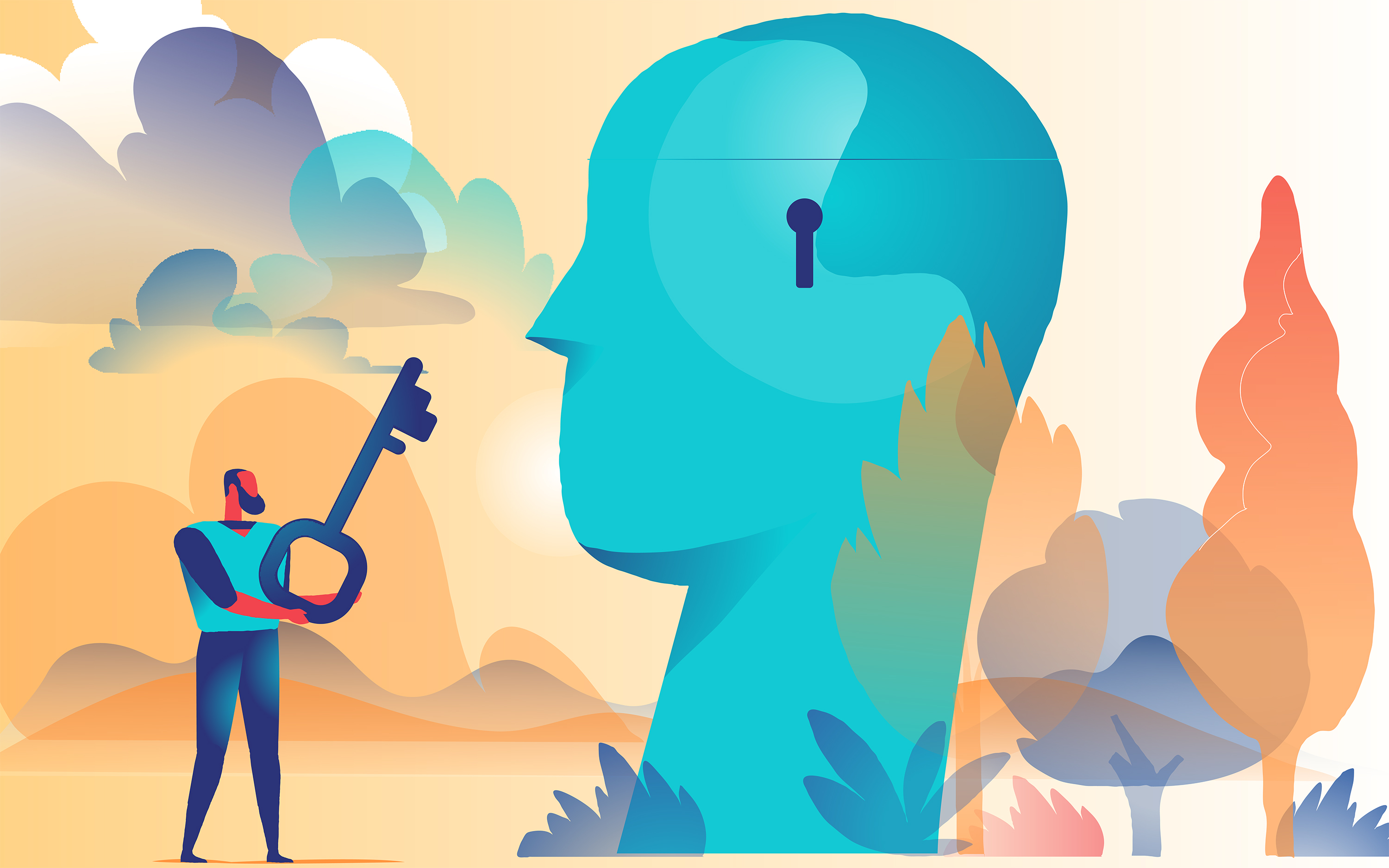
We easily recognize our anxiety when it shows up as an anxiety attack, or when a cascade of anxious thoughts is triggered by a stress-inducing event like public speaking. Yet anxiety is a lot less noticeable when it’s our constant companion—part of the background noise in our thoughts on a regular basis. In those situations, it’s most likely that anxiety has become a habit.
“But how can anxiety be a habit?” we may ask. It’s not something we do—it just seems to pop up, bringing our body and brain along for the ride—and most people who deal with frequent anxiety see it as a problem, rather than fulfilling a need. The answer lies in our brain’s built-in reward system. According to the latest research on habit change, anxiety hides in a habit loop that consists of a trigger, a behavior, and a result. While we tend to think of habits as outward actions that bring us a perceived reward (like smoking to feel calmer, brewing a warm drink to wake us up, or brushing our teeth often to prevent dental problems), the evolutionarily older part of our brain—the part that’s continually scanning our environment for danger—can also get a sense of reward from an emotion that prompts a behavior.
For example, you could feel anxiety about a work project that’s due soon (trigger). Then, you devote long evenings and your entire weekend to reading, researching, and planning for the project (behavior). Then, perhaps you feel more prepared and confident about the project (result). This is a classic example of an anxiety habit loop.
The Anatomy of an Anxiety Habit Loop
Trigger: Emotion/Thought
Behavior: Rumination/Action
Result: Distraction/Feel in Control
Adding to the complexity, anxiety can spin off of any point in a habit loop. For example, pulling out your phone and checking your social feed might offer some brief anxiety relief, “but this just creates a new habit, which is that when you’re stressed or anxious, you distract yourself,” says psychiatrist and neuroscientist Judson Brewer.
This is how a habit loop can, at least temporarily, give us “the reward of feeling less anxious,” says Brewer. “It’s like playing a slot machine in a casino and winning just enough times to keep us coming back for more.” But when the distraction doesn’t work, you’re left with having to come up with another solution. This can lead to more worrying, and that worrying becomes its own trigger, says Brewer.
Two Reasons Our Brains Create an Anxiety Habit Loop— and How to Break the Cycle
Reason 1: Anxiety makes you feel safe. No joke: According to research, the act of worrying can sometimes feel good. A 2019 study at Penn State found that anxious people who were doing a relaxation exercise were reluctant to let go of their anxious thoughts. This reluctance to relax, the researchers found, stemmed from an attempt to shield themselves from the bigger, more dramatic swings in emotion—from anxious to relaxed and back again—that participants feared. In other words, it felt “safer” to simply stay anxious all the time.
Reason 2: Your brain thinks it’s solving a problem. Then there’s the (counterintuitive) notion that ruminating on a problem can provide the illusion of working toward a solution, rather than doing nothing. And occasionally, our worried minds do come up with solutions, which can make it seem like anxiety itself yields productive results—or, at least, a sense that we’re in control of the anxiety-inducing situation. After a while, reacting to our everyday life with anxiety can turn into a mental habit.
Break the loop: The first step to disrupting this cycle is paying attention and becoming aware of our anxiety. In one of Brewer’s studies, mindfulness training (which included noticing anxious habits and becoming aware of worry habit loops) reduced anxiety in people with generalized anxiety disorder by 63%.
To reset the reward values our brain attaches to specific habits, writes Brewer, “We need to give our brains new information to establish that the value they had learned in the past is now outdated. By paying attention to the results of behavior in the present moment, you can jolt your brain out of habit autopilot and see and feel exactly how rewarding (or unrewarding) the habit is for you right now.”
READ MORE
Well-Being
Perfect Practice Makes Perfect
It's not enough just to practice something for a sheer number of hours, says Daniel Goleman. You have to do it in a smart way.
Read more
Jan 6,2014
Daniel Goleman
Well-Being
Three Practices to Shake Up Your Routine
When life begins to feel repetitive, it's a sign you've gotten stuck in old habits. Explore these simple ways to reconnect.
Read more
Sep 18,2019
Ed Halliwell
Well-Being
The Importance of a Breakdown
A breakdown can be inconvenient, but it comes with an important message. In this video from School of Life, philosopher Alain de Botton explains how breakdowns provide you with an opportunity to listen to what your body and mind really need.
Read more
Jul 20,2018
Nicole Bayes-Fleming
Well-Being
How to Be Mindful Every Day of the Week
Got a minute? That’s enough time to generate meaningful action every day of the week.
Read more
Get Practices, tips, and special offers delivered straight to your inbox
ABOUT THE AUTHOR
Oyinda Lagunju
With an educational background in biology and previous experience as an academic writer, Oyinda has always shown a great affinity for wellness and well-being, an interest she has brought to her role as an associate editor at Mindful. Adept at various forms of digital content creation, Oyinda has the ability to use various mediums to highlight an issue. As a breakfast enthusiast with her head in the clouds, you can find her either at brunch or thinking about brunch.
Get Practices, tips, and special offers delivered straight to your inbox